
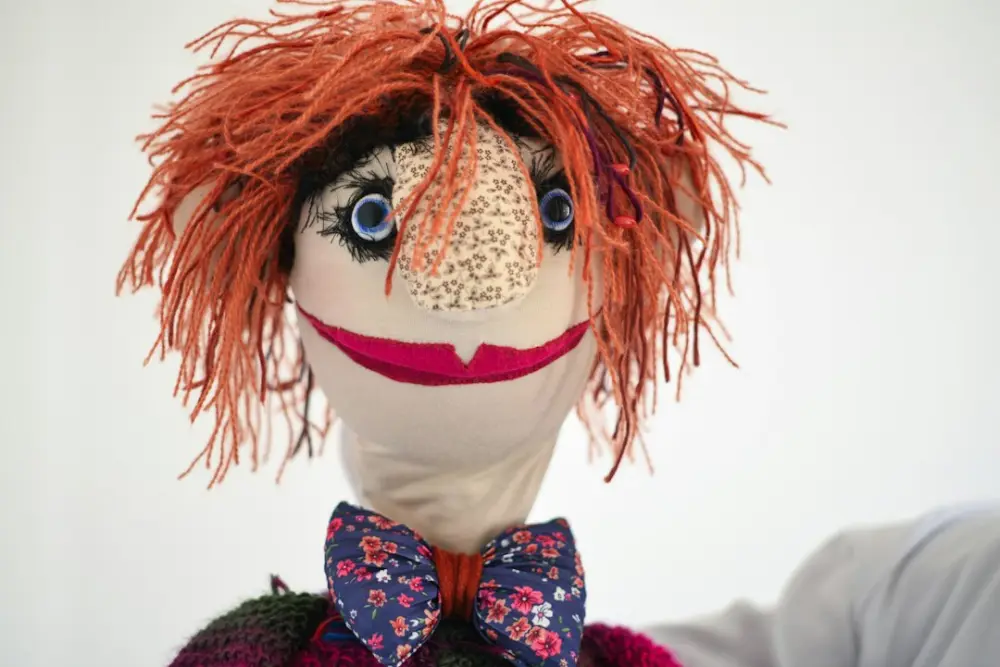
Exploring character voices and motivations is the process of defining how a puppet speaks and why it acts. It combines vocal qualities—like pitch, tempo, and texture—with an understanding of the character’s specific desires. This practice ensures that every movement and word serves a purpose, turning a simple prop into a relatable, consistent persona.
When you sit down with a new puppet, the temptation is to write a complex backstory first. However, starting with the physical voice allows the character's needs to emerge through sound. A gravelly voice might belong to a character who has lived a long life, while a squeaky, rapid-fire tone might indicate a character who is constantly overlooked and eager to be heard.
In the context of puppet-based storytelling, a voice is more than just an accent or a funny noise. It is the audible manifestation of a character’s history and current emotional state. When we talk about motivation, we are looking for the "why" behind the puppet’s actions. For example, a blue fuzzy monster puppet might speak in a slow, deep rumble not just because it looks large, but because its primary motivation is to maintain a sense of calm and safety in a chaotic room. By aligning the sound with the intent, the puppeteer creates a cohesive experience for the audience. This type of playful character work is actually transforming how we approach the blank page, as it forces the creator to inhabit a perspective different from their own through tactile engagement.
Why character depth matters
Consistency is the primary reason to focus on voice and motivation. Without a clear set of vocal rules and a driving force, a character can feel disjointed or erratic. If a rabbit puppet is established as nervous and high-strung but suddenly speaks in a confident, booming bass without any narrative reason, the immersion is broken. Establishing a firm vocal profile helps the performer stay "in character," making the storytelling feel more authentic and less like a series of random jokes.
Furthermore, understanding motivation helps solve the problem of "writer's block" during improvisation. If you know that your puppet, let’s call him Barnaby the Bear, is motivated by a desperate hunger for honey, every interaction becomes easier to navigate. When Barnaby meets a stranger, his first question isn't "How are you?" but rather "Do you happen to have any snacks?" This clarity of purpose drives the plot forward without requiring a pre-written script. It is one of the benefits of building characters through consistent, low-stakes interaction; the more you play with the character, the more their natural responses become second nature.
In educational settings, such as a third-grade classroom using puppets to teach social-emotional skills, these motivations become teaching tools. A puppet motivated by a fear of making mistakes can help children discuss their own anxieties. The voice—perhaps a quiet, hesitant whisper—reinforces the vulnerability of the character, making the lesson more impactful than a simple lecture would be.
How character development works
Developing a character is a structured process that moves from the physical to the psychological. It involves a series of experiments to see what "sticks" to the puppet’s form. You can follow these steps to build a persona from scratch:
- The Physical Audit: Hold the puppet and observe its features. Does it have a large mouth? Wide eyes? A long neck? A puppet with a large mouth might naturally lend itself to a more boisterous, loud voice, while a puppet with narrow eyes might suggest a more suspicious or calculating personality.
- Vocal Range Testing: Experiment with three variables: pitch (high vs. low), speed (fast vs. slow), and texture (smooth vs. gravelly). Try to find a combination that feels comfortable for your throat and matches the puppet's look. For a small bird puppet, you might settle on a high-pitched, fast, chirpy texture.
- Defining the Primary Want: Ask yourself what the puppet wants most in this exact moment. This is the short-term motivation. Then, ask what they want out of life. This is the long-term motivation. A turtle puppet might want to cross the road right now, but its long-term motivation is to find a place where it doesn't have to hide in its shell.
- The "Obstacle" Test: Place your puppet in a mundane situation, such as waiting for a bus or trying to open a jar of pickles. How does their voice change when they are frustrated? If their motivation is to be seen as strong, they might refuse help even when their voice starts to crack with effort.
A practical example of this is the "Grumpy Chef" scenario. The puppet is a chef (physical cue), speaks with a clipped, rhythmic staccato (voice), and is motivated by a desire for absolute perfection (motivation). When a kitchen disaster occurs, the chef’s voice doesn't just get louder; it gets faster and more precise as they try to regain control of the situation.
Common misconceptions
One of the most frequent misunderstandings is the belief that you need to be a talented voice actor or impressionist to create a character. In reality, the most effective puppet voices are often the simplest ones. A slight shift in placement—speaking through the nose instead of the chest—is often enough to differentiate a character from your own natural speaking voice. You don't need a repertoire of twenty accents; you only need one or two distinct vocal qualities that you can maintain consistently.
Another misconception is that motivation must be complex or dramatic. In professional acting, characters often have deep-seated traumas or elaborate goals. In playful character creation, a motivation can be as simple as "I want to find a shiny object" or "I am afraid of loud noises." These simple drivers are often more effective for storytelling because they are easy to remember and provide clear direction for every scene. You can find more information on basic character archetypes through resources like Wikipedia's overview of character arcs to see how simple goals drive narrative change.
Finally, many people assume that the voice is fixed once it is chosen. Characters, like people, can evolve. A puppet that starts as a shy, quiet observer might find their voice and become more assertive as their story progresses. The motivation might shift from seeking safety to seeking adventure. Allowing for this growth makes the character feel more alive and less like a static toy.
Key terms for character creation
To better understand the mechanics of this process, it helps to use specific terminology that describes how sound and intent interact. These terms provide a framework for analyzing why a character feels "right" or "wrong."
- Vocal Placement: This refers to where the sound seems to originate in your body. A "nasal" voice sounds like it is coming from the nose, often suggesting annoyance or curiosity. A "chest" voice is deeper and more resonant, often suggesting authority or warmth.
- Tempo and Rhythm: This is the speed and beat of the character's speech. A character who speaks in short, jerky bursts (staccato) feels very different from one who speaks in long, flowing sentences (legato).
- The Objective: Borrowed from acting theory, this is what the character is trying to achieve in a specific scene. If the objective is to "convince," the voice will likely be softer and more persuasive.
- Vocal Fry or Texture: This describes the "grain" of the voice. A raspy or breathy voice can indicate age, exhaustion, or even mystery.
- Speech Patterns: These are the specific words or phrases a character repeats. A character who starts every sentence with "Well, actually..." has a very different motivation (the need to be right) than one who ends every sentence with a question.
Using these terms allows a creator to fine-tune a performance. If a puppet feels flat, you might realize it’s because you haven't defined its vocal placement, or because its objective isn't clear in the current moment. For a deeper look at the physiology of voice, you might consult ASHA for information on how different vocal resonators work.
Practical steps for character play
To begin shaping a personality, start with a "vocal warm-up" using your puppet. Put the puppet on your hand and try to say the same sentence—something mundane like, "The weather is quite cloudy today"—in five different ways. Change the pitch for the first, the speed for the second, and the emotional intent for the third. This exercise helps you discover sounds you might not have considered and breaks the habit of using your own natural voice.
Once you find a voice that fits, give the character a "signature move" or a physical quirk that matches their motivation. If your character is motivated by curiosity, perhaps they always tilt their head to the side before they speak. If they are motivated by caution, maybe they always look behind them before answering a question. These physical cues act as a trigger for your brain, helping you slip back into the character’s voice and mindset instantly.
At Sock Puppet Theatre, we believe that these small, intentional choices are what make storytelling accessible to everyone. By focusing on the intersection of voice and motivation, you move beyond simple play and into the realm of meaningful character creation. Whether you are using a puppet to write a new story, teach a lesson, or simply entertain a friend, these techniques provide the foundation for a character that feels truly distinct and memorable.